






Last updated August 26, 2026
Reviewed by Sasha Eslami, Level 3 IFS Practitioner · August 26, 2026
IFS Inner Critic: Transforming the Voice Inside Your Head
Understanding Your IFS Inner Critic
Who this is for: Anyone who struggles with a harsh internal voice, perfectionism, or self-doubt, and wants to learn how to transform their IFS inner critic into a source of self-compassion using Internal Family Systems therapy.

Ever feel like your harshest critic lives rent-free in your head? Maybe it pops up with gems like, “You’re not good enough,” or “Why did you do that?!” If this inner critic feels like a constant, unwelcome guest, you’re not alone. For many of us, the IFS inner critic is one of the loudest and most persistent parts of our internal system.
But here’s the good news: you can work with your inner critic—not against it. Using Internal Family Systems (IFS) therapy, you can uncover what your critic truly needs, soften its approach, and even transform it into a helpful ally.
Learn IFS Basics here
In this article, we’ll dive into the world of inner critics through the lens of IFS. We’ll explore why they exist, how they show up, and practical steps to quiet their harsh tone. By the end, you’ll see your inner critic not as a bully, but as a misguided protector ready for a new role.
What is an Inner Critic in IFS?
An inner critic is a part of your internal system that loves pointing out your flaws, mistakes, or shortcomings. Think of it as that nagging voice that pipes up when you’re already feeling down.
In IFS, inner critics typically act as managers—parts that try to keep you safe by preventing failure, embarrassment, or rejection. Their intentions are good (yes, really!), but their methods? Not so much. That harsh, judgmental tone often leaves you feeling defeated, ashamed, or stuck in a cycle of self-doubt. It’s like having a drill sergeant who forgot it’s supposed to motivate you, not demoralize you!
What are Managers in IFS?
Why Do Inner Critics Exist?
Inner critics don’t come out of nowhere. They usually develop in response to life experiences, often during childhood or other formative times. Here’s how they form:
1. A Vulnerability is Exposed
Something happens that makes you feel hurt, rejected, or humiliated—like being criticized at school or feeling excluded in a group. It’s like getting a bad haircut and deciding you’ll never trust hairstylists again!
2. A Protective Part Steps In
An inner critic forms to shield you from experiencing that pain again. It might say things like:
- “Don’t even try—you’ll just fail.”
- “If you don’t stand out, no one can judge you.”
Think of it as your brain’s way of installing a security system that’s a bit too overprotective.
3. The Critic Becomes Overactive
Over time, the critic applies its tactics everywhere, even when they’re not helpful. Instead of protecting you, it keeps you small and stuck. It’s like having a GPS that insists on taking you through every possible detour—even when you just want to drive straight to the store!
The Impact of Inner Critics
When your inner critic runs the show, it can have a profound effect on your emotional and mental well-being. Here are some common struggles:
- Low Self-Esteem: Constant criticism can erode your confidence.
- Fear of Failure: The critic’s warnings might prevent you from trying new things or taking risks.
- Perfectionism: It might push you toward impossible standards, leaving you feeling exhausted and never “good enough.”
- Procrastination: The fear of criticism can lead to avoiding tasks altogether.
Sound familiar? Don’t worry—IFS offers a way to work with your inner critic and find relief.
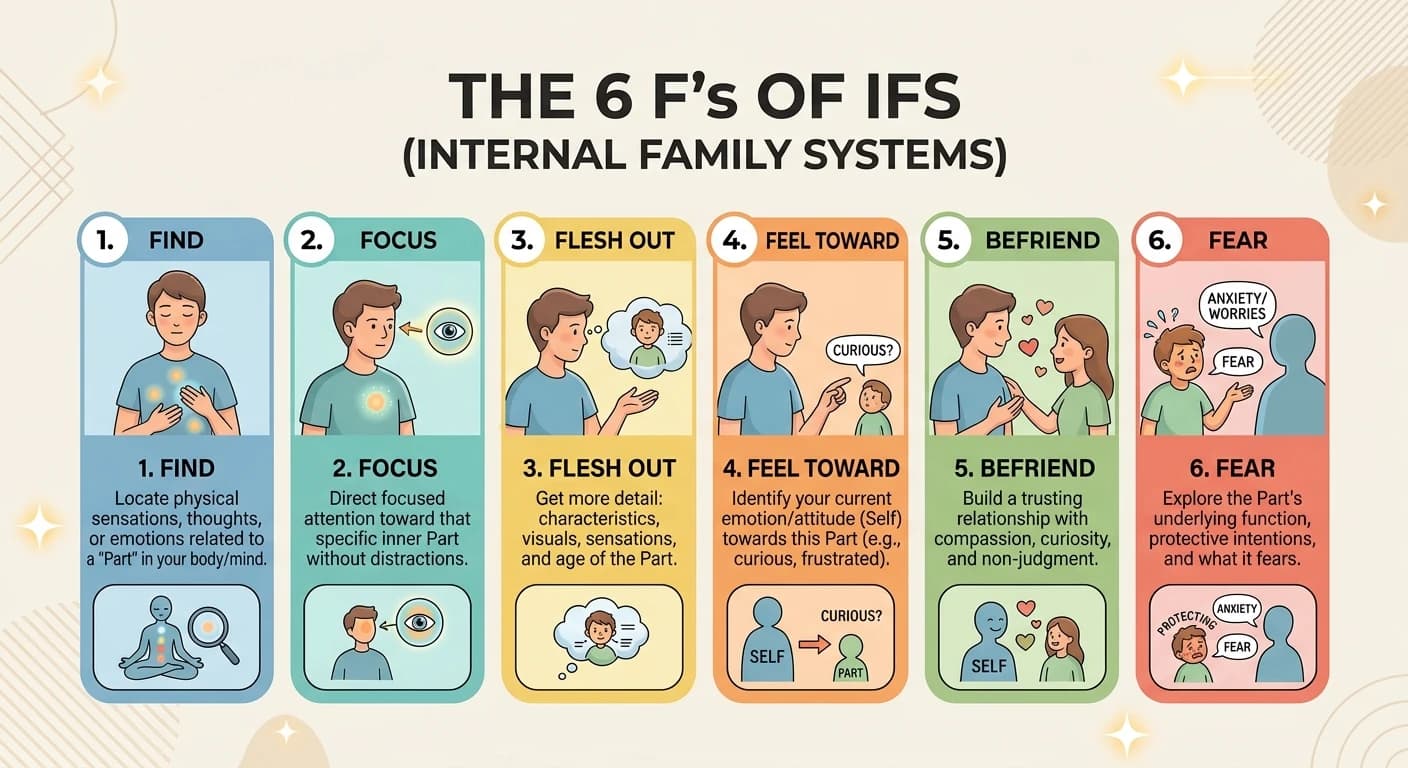
How IFS Can Help Transform Your Inner Critic
IFS doesn’t view the inner critic as an enemy to be silenced. Instead, it sees this part as a protector with good intentions but flawed strategies. By working with your critic compassionately, you can help it find a new, more supportive role.
1. Identify the Inner Critic
The first step is noticing when your inner critic shows up. Pay attention to:
- Tone: Is it harsh or judgmental?
- Messages: What is it saying?
- Triggers: Does it appear at work, in relationships, or during stressful situations?
Simply naming this part as your inner critic helps you separate it from your core Self.
2. Approach with Curiosity and Compassion
Instead of trying to drown out or argue with your critic, approach it with curiosity:
- “What are you trying to protect me from?”
- “How long have you been doing this job?”
- “What would you need to feel less anxious about this situation?”
You might discover that beneath its harsh tone, your critic is simply trying to keep you safe or help you succeed.

3. Uncover Its Fears and Motivations
Inner critics often act out of deep fears, such as:
- “If I’m not hard on you, you’ll fail, and everyone will laugh.”
- “If I let you relax, you’ll stop being productive, and everything will fall apart.”
Once you understand these fears, you can reassure your critic that you, as the Self, are capable of leading without its harsh tactics.
4. Offer a New Role
Critics don’t want to harm you—they just want to be heard. Once they feel seen and understood, you can invite them to take on a new, supportive role:
- A critic that demands perfection might become a gentle motivator.
- A critic that highlights mistakes could help you learn and grow from them.
Practical Exercises for Soothing Your Inner Critic
Try these IFS-inspired strategies to start transforming your inner critic today:
1. Journaling Your Inner Dialogue
Write down a conversation between your Self and your inner critic. Let it express its concerns, and respond with compassion. It’s like having a heart-to-heart chat with that overly critical friend!
2. Visualizing Your Critic
Close your eyes and imagine your critic as a person or figure. Is it stern? Nervous? Protective? Picture yourself having a calm, reassuring conversation with it. Think of it as redecorating your mental office—make your critic feel at home!
3. Create an Appreciation List ✨📝
Once your critic softens, make a list of the positive ways it has tried to help you. Acknowledging its efforts can strengthen your relationship with this part. It’s like saying thank you to your overachieving sibling!

Want to dive deeper? Watch our video on Working with Inner Critic Parts or explore Inner Critics in IFS in our Learn library.
- Arguing with it: Trying to prove the critic wrong usually makes it louder.
- Ignoring it: Pushing the critic away can make it feel unappreciated and work harder.
- Believing it: Remember, the critic's words are a protective strategy, not the absolute truth.
Common Mistakes When Working With Your Critic
<b>Self:</b> 'I hear you telling me I'm going to fail this presentation. What are you afraid will happen if I don't worry about it?'<br><br><b>Critic:</b> 'If you don't worry, you won't prepare, and everyone will think you're incompetent.'<br><br><b>Self:</b> 'I understand you're trying to protect my reputation. What if I promise to prepare thoroughly, but without the harsh pressure?'
Here is an example of how a mini-dialogue might look when you approach your critic with curiosity:
4. Try a Mini-Dialogue
Discover the IFS Inner Critics Workshop
Does your inner critic feel like an unrelenting force in your life? Our recorded IFS Inner Critics Workshop is here to help. Taught by Sasha Eslami, this on-demand video workshop dives deep into understanding and transforming your inner critic using Internal Family Systems therapy principles. You can watch and re-watch it anytime at your own pace for just $39.
3. Create an Appreciation List
- Identify the triggers and patterns of your inner critic.
- Build a compassionate dialogue to uncover its needs.
- Develop tools to help your critic take on a more supportive role.
Ready to reclaim your inner peace?
Watch our recorded IFS Inner Critics Workshop here.
The IFS Guide App: Your Pocket-Sized IFS Coach
Need extra support between sessions? The IFS Guide App is like having a practitioner in your pocket.
With this app, you can:
- Track your inner Parts: Monitor your inner critic and other parts.
- Practice dialogues: Use AI-powered tools to explore your Parts’ needs.
- Build daily habits: Create routines that support harmony in your internal system.
Start fostering inner peace today.
Download it now: IFS Guide App
Final Thoughts: Turning Your Inner Critic into an Ally
Your inner critic doesn’t have to be your nemesis. With IFS, you can transform it from a harsh taskmaster into a supportive guide.
By listening with curiosity, understanding its fears, and offering it a new role, you can free yourself from its constant judgment and discover true inner harmony.
Your inner critic—and your future self—will thank you.

Frequently Asked Questions About the IFS Inner Critic
In Internal Family Systems, an inner critic is typically a manager part that uses harsh judgment or criticism to protect you from failure, rejection, or emotional pain.
IFS doesn't aim to get rid of parts. Instead, the goal is to understand the inner critic's protective intentions and help it take on a new, healthier role in your internal system.
An inner critic often becomes loud when it feels you are in danger of experiencing vulnerability or shame. It believes that by being harsh, it can prevent you from making mistakes that lead to pain.
Your intuition usually feels calm, clear, and grounded, even when warning you about something. The inner critic, on the other hand, often feels urgent, harsh, anxiety-provoking, and judgmental.
I
Written by
IFS Guide Editorial Team

Reviewed by
Sasha Eslami
Level 3 IFS Practitioner