








Last updated September 1, 2026
Meeting Protectors in IFS
The problem: Our protective parts often use extreme strategies—like anxiety, perfectionism, or anger—to keep us safe, which can feel overwhelming. The promise: In this guide, you'll learn step-by-step how to meet your protectors with compassion, build trust, and help them relax using SELF energy.
Who this is for: Anyone beginning their IFS journey who wants to understand how to safely approach and connect with their protective parts.

The goal of Internal Family Systems (IFS) practice is to build Self-to-Part relationships, which is essential when meeting protectors in IFS. By doing so, your inner system becomes increasingly aware of the existence and presence of the Self. To understand the foundational concepts, you can explore what IFS therapy is and its basics.
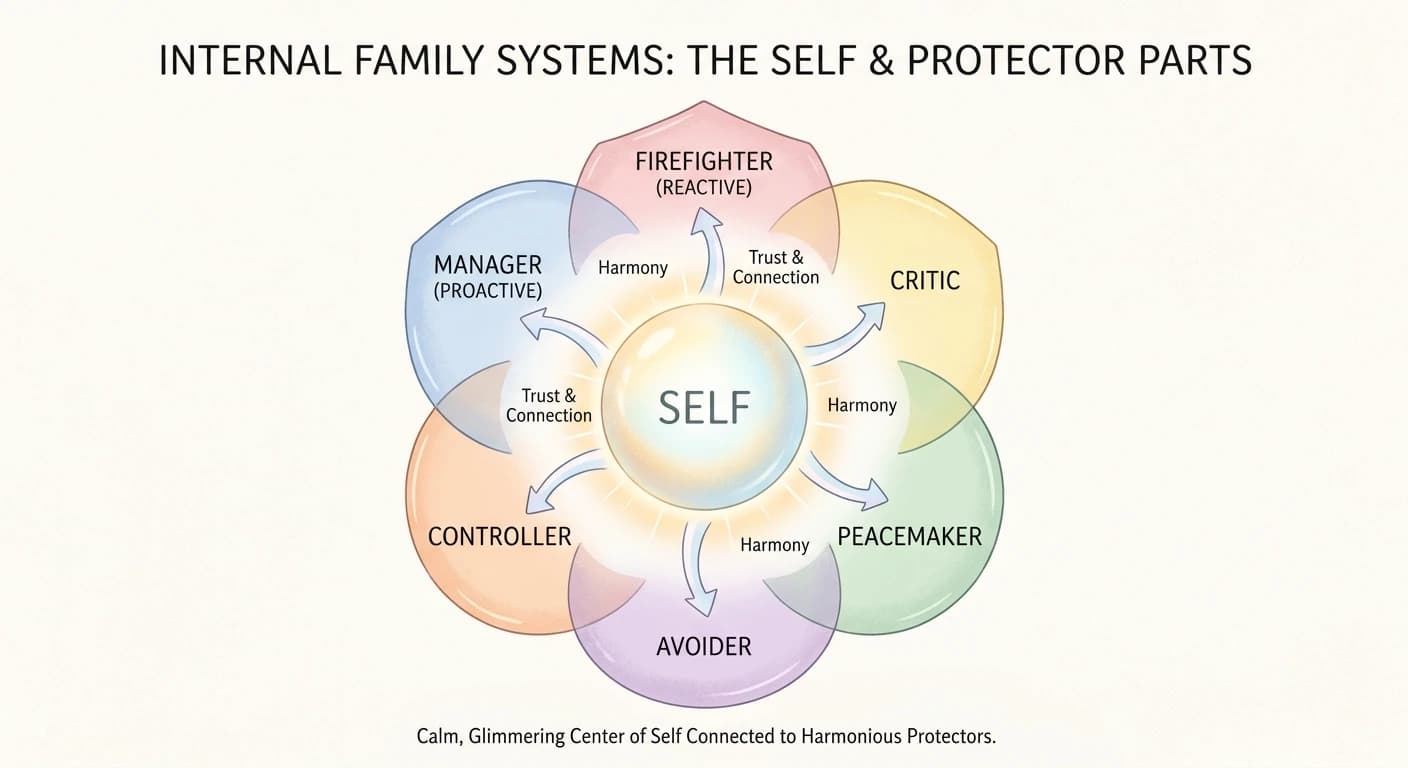
The Self can act as the primary caretaker of your Exiles, helping them heal, and as the leader of your internal system, allowing Protectors to relax and step to the side. This dynamic process is what we call Self-leadership. It’s like having the ultimate project manager who ensures every team member is happy and productive!
This article explores the common traits of Protectors, offering sample questions for each trait to demonstrate that there is no “right” or “wrong” way to approach them. You might also want to explore common Protector fears to better understand their motivations.
Meeting Protectors in IFS: The Role of SELF
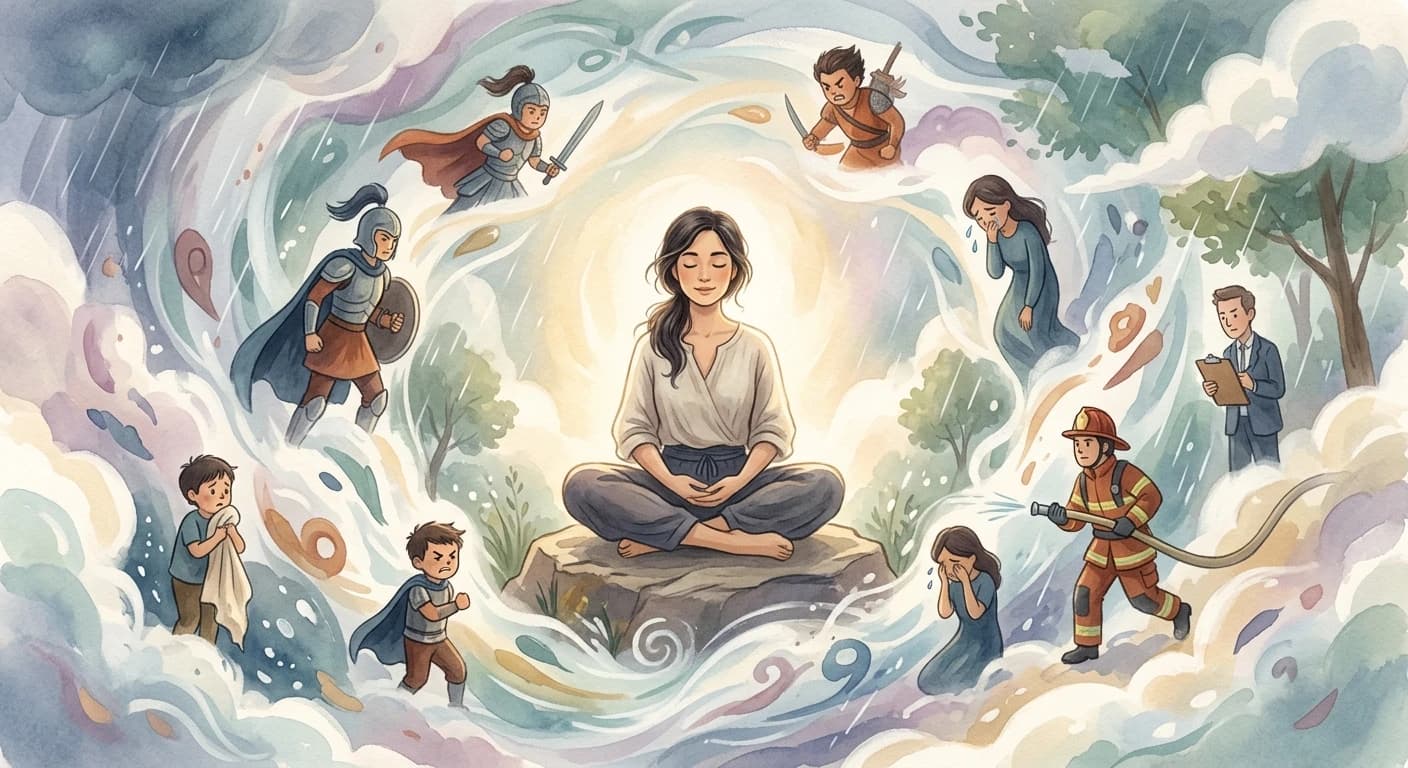
In Internal Family Systems (IFS), the SELF is the undamaged, natural core of your being. Unlike your Parts, which carry burdens or take extreme roles to protect you, the SELF is pure, compassionate, and infinitely wise.
Dr. Richard Schwartz, the creator of IFS, describes the SELF as:
- Always present: The SELF is always within you, even when it feels hidden behind active Parts.
- A calm leader: The SELF naturally leads your internal system, guiding your Parts with clarity and kindness.
- Unburdened: The SELF doesn’t carry the pain or fears of your Parts. Instead, it offers love, understanding, and healing.
Think of your SELF as the eye of a storm—steady and calm, no matter how wild the winds of emotion might be. Or as that one friend in a crisis who says, “Let’s get snacks and talk this out.” You can dive deeper into understanding the SELF in IFS to see how it guides your internal system.
The 8 C’s of SELF: The Core Qualities
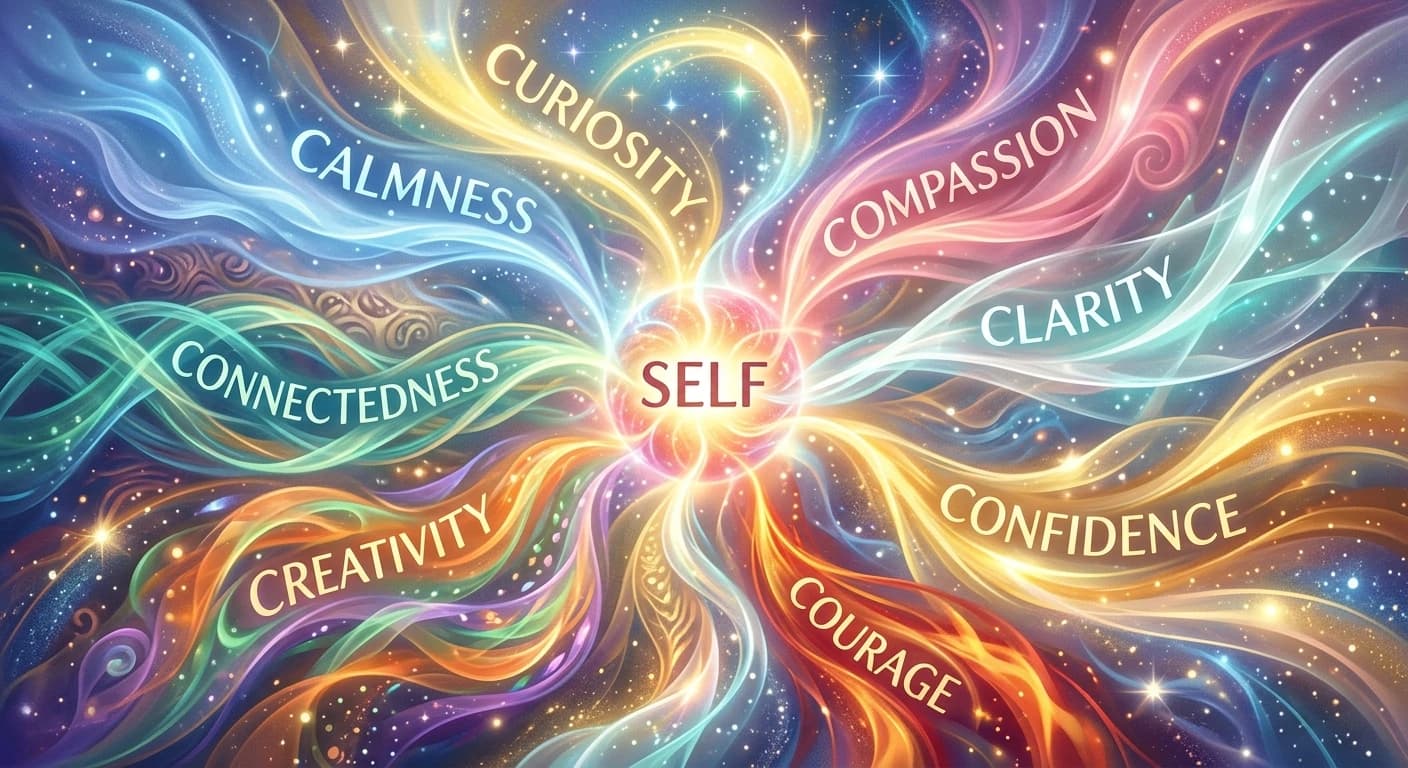
The SELF embodies eight key qualities that naturally emerge when it’s leading. Known as the 8 Cs of SELF, these qualities represent your best self in action. Let’s dive in:
- Calmness: The SELF brings a sense of calm, even amidst emotional chaos. It allows you to pause, breathe, and respond instead of react. Example: When an anxious Part feels overwhelmed, the SELF reassures it with, “I’m here for you. Let’s figure this out together.”
- Curiosity: Instead of judging your Parts, the SELF approaches them with genuine curiosity. It’s like saying, “What’s your story, and how can I help?”
- Compassion: The SELF holds endless compassion—for your Parts, for yourself, and for others. Imagine being hugged by kindness itself.
- Clarity: SELF energy clears the fog of confusion, helping you understand your Parts and their needs with precision and insight.
- Confidence: With the SELF leading, you trust yourself and your ability to navigate life’s challenges. Think of it as your inner pep talker cheering, “You’ve got this!”
- Courage: The SELF has the bravery to face even the most difficult emotions or memories. After all, healing takes guts and a sprinkle of boldness!
- Creativity: From finding solutions to imagining new ways to heal, SELF energy unlocks your creative potential.
- Connectedness: The SELF fosters connection—both within (to your Parts) and with others. It reminds you that you’re never truly alone.
When you embody these qualities, you step into your most empowered, harmonious self—cue the happy dance!
Why SELF is Essential in IFS Therapy
The SELF plays a pivotal role in the healing process in IFS because it alone possesses the qualities needed to foster trust, compassion, and transformation.
Healing Wounded Parts
Parts carrying pain, shame, or fear need the SELF’s love and understanding to unburden and heal.
Example: If a Part feels unlovable, the SELF might say, “You are worthy of love, just as you are.”
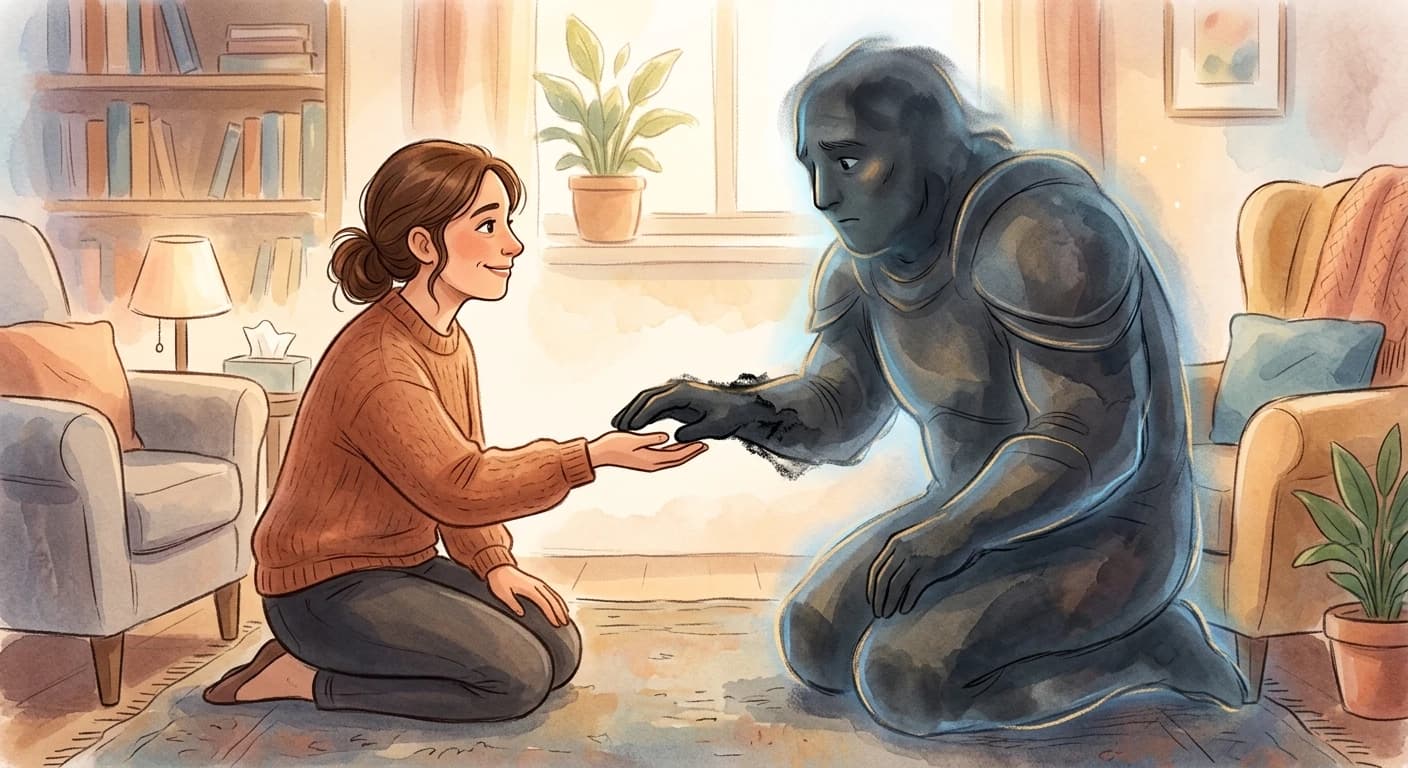
Building Trust with Your Protectors
Protectors like the Inner Critic or Perfectionist need to trust the SELF before stepping back. The SELF reassures them, “I’ve got this—you can rest now.” Learning about building trust with Protectors is a crucial step in this process.
Restoring Inner Balance
With the SELF leading, Parts stop battling for control. They feel heard, valued, and safe. Imagine your inner world turning into a synchronized orchestra instead of a chaotic drum circle.

Enhance Your IFS Practice with the IFS Guide App
The IFS Guide App offers 24/7 AI-guided IFS Sessions, Daily Check-Ins, adaptive Self-Healing Meditations, and Parts Mapping to visualize your Parts’ relationships. Additionally, join the In-App Community, explore guided Trailheads, set Reminders, and Track Parts to support your SELF development and foster inner harmony daily. Download the IFS Guide App to start your journey.
How to Recognize SELF Energy
Wondering if you’re in SELF energy? Look for these signs:
- You feel calm and centered.
- You approach emotions and Parts with curiosity, not judgment.
- You feel a sense of connection and compassion.
- You trust your ability to handle challenges with clarity and courage.
When you’re NOT in SELF, you might feel anxious, reactive, or overwhelmed. Don’t worry—SELF is always there, waiting for you to tune in.
How to Access SELF Energy
Here are some practical steps to tap into your SELF:
Pause and Breathe
Take slow, deep breaths. Imagine each inhale invites calmness and each exhale releases tension.

Notice Your Parts
Pay attention to what you’re feeling. Are you anxious, critical, or angry? Acknowledge these Parts with kindness.
Ask Parts to Step Back
Gently ask your active Parts for space: “Can you step back a little so I can help?”
Invite Curiosity
Approach your inner world with curiosity. Ask your Parts, “What do you need right now?”
Practice Compassion
Treat yourself with the same kindness you’d offer a dear friend.
<b>You:</b> 'I notice a tight feeling in my chest. Are you a part trying to protect me?'<br><b>Protector:</b> 'Yes, if I don't worry, everything will fall apart.'<br><b>You:</b> 'I understand you're working really hard to keep me safe. What are you afraid would happen if you stopped worrying?'<br><b>Protector:</b> 'I'm afraid we'll get hurt again.'<br><b>You:</b> 'Thank you for sharing that. I'm here now, and we can handle this together.'
— A sample dialogue demonstrating curiosity and compassion.
Here is an example of what meeting a protector might sound like in practice:
Example: A Mini-Dialogue with a Protector
How SELF Heals Parts: A Practical Example
Let’s say a Part of you feels ashamed after making a mistake:
- Focus on the sensation—a gripping tension in your chest.
- Ask which Part lives there—a Worrier Manager trying to keep you safe.
- Thank the Part for its hard work.
- Breathe deeply into the tightness and visualize releasing it.
- Uncover an Exile carrying fear from childhood.
- Offer reassurance to the Exile, leading to relief in your chest.
By integrating body awareness, you transform your relationship with anxiety, making room for calm and confidence. For more context, you can read about what Parts are in IFS and how they function.
Frequently Asked Questions
In Internal Family Systems (IFS), protectors are parts of our personality that take on defensive roles to keep us safe from emotional pain and vulnerability.
Meeting protectors in IFS involves approaching them with curiosity and compassion from a place of SELF energy, rather than trying to bypass or eliminate them.
SELF energy provides the calm, compassionate presence needed for protectors to feel safe enough to share their fears and eventually relax their extreme roles.
If a protector won't step back, don't force it. Instead, get curious about its fears. Ask, 'What are you afraid would happen if you stepped back?' Validating their concerns builds trust.
Conclusion: The Power of SELF in IFS
The SELF is your greatest ally in the journey to healing and balance. As the calm, compassionate leader of your internal system, the SELF transforms chaos into harmony, pain into growth, and fear into courage.
Ready to connect with your SELF? Here are some resources to help you along the way:
- Check our Upcoming Online IFS Events to join live sessions.
- Watch our recorded IFS & Advanced Unblending Techniques workshop to learn how to recognize and unblend from intense emotions and protectors at your own pace.
No matter how overwhelming life feels, remember: your SELF is always within you, ready to guide you back to peace.
Here’s to embracing the power of SELF and nurturing your inner harmony!
Happy healing on your path to inner harmony! Remember, your SELF has all the right tools to guide you toward a more balanced and joyful life.